

Requests and handoffs
Bring incoming work into a clear register with ownership, status and the next action. Define what can change at each step and retain the context needed for later decisions.
Custom web applications
Your next system can begin with the work itself. Turn scattered requests, spreadsheets and handoffs into an application designed around your team. No new website is required.
A small company can outgrow spreadsheets long before it needs a large enterprise suite. Requests arrive in several places, approvals depend on a particular person and nobody has a reliable view of the next action. A standalone application gives those steps a shared structure while your existing website stays where it is.
We start with the people who enter information, the people who act on it and the decisions the system must explain. That might mean a project workspace, a service operations desk or a customer portal. The useful first release is a defined workflow, not every possible feature at once.
Possible solution modules
These are capabilities to scope around your operation, not a fixed bundle of connected services.
Bring incoming work into a clear register with ownership, status and the next action. Define what can change at each step and retain the context needed for later decisions.
Connect documents, revisions and decisions so people can identify what was reviewed. A production system can add authenticated permissions and notifications where they belong.
Make operational questions answerable from recorded data. Agree which measures are useful, how they are calculated and how missing information should appear.
Assess the available APIs, data ownership and provider terms before promising an integration. Migration, external fees and failure handling form part of its scope.
How the work takes shape
Bring examples of current forms, spreadsheets and handoffs. We define users, records, decisions and the boundary of a useful first release.
Agree the screens and rules, then review a usable version with representative sample data. Feedback concerns the workflow as well as its appearance.
Set out hosting, accounts, permissions, backups, documentation and support responsibilities. Production data and integrations need an agreed launch plan.
An honest example
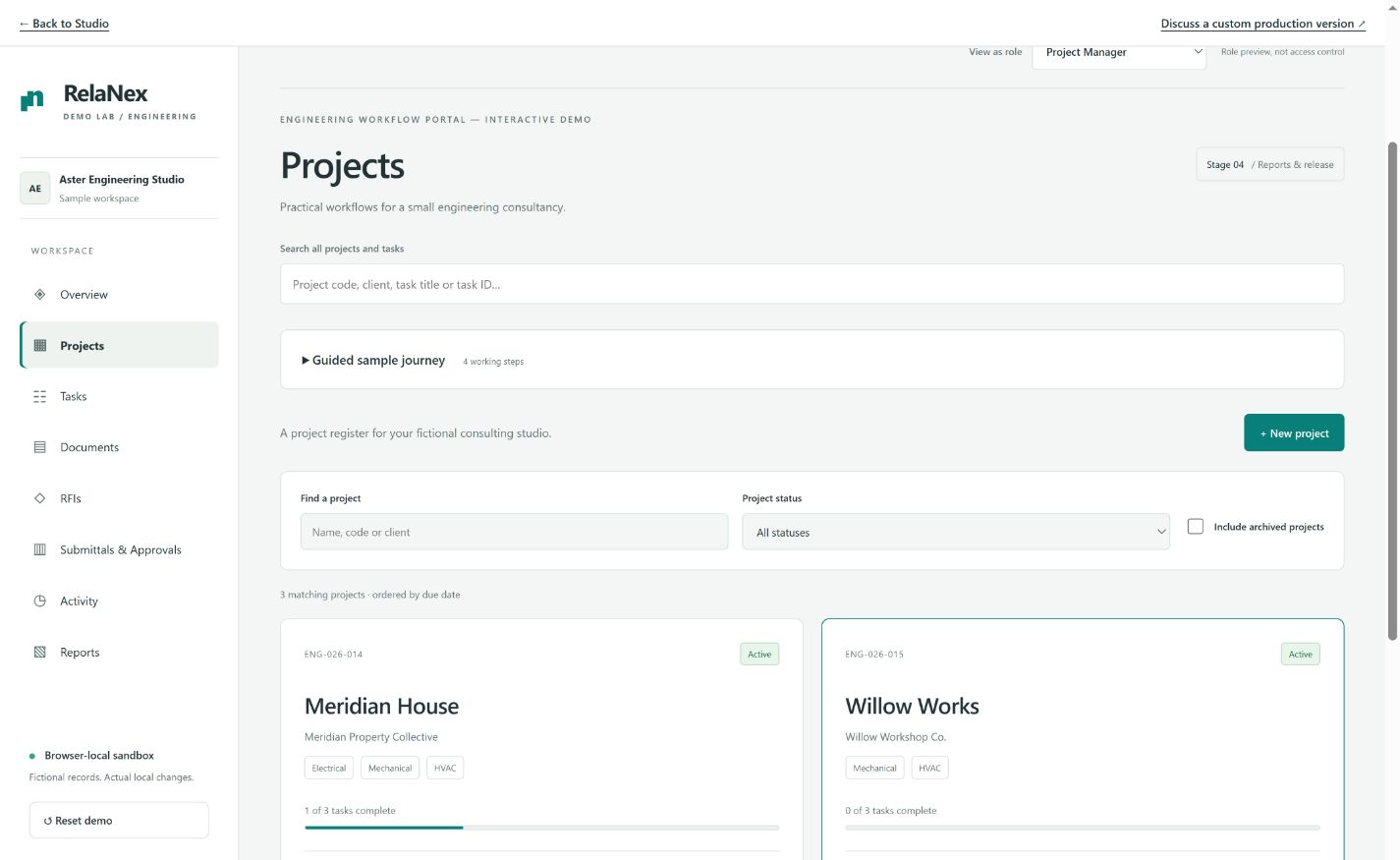
The Engineering and Field Service portals show two different applications with real local interactions. Northlight adds a client-facing prototype with local decisions and simulated sign-in, file downloads, messaging and payments. Their records are fictional and stored in your browser. They demonstrate workflow behavior rather than a deployed multi-user service or a claim about client results.
Questions before you begin
No. A business application can be commissioned independently. We agree where it lives and how, if at all, it should connect to your current website.
They can inform discovery and interface decisions. Production use requires server data, authentication, permissions, backups, deployment and any agreed integrations; these are separately scoped work.
Import can be assessed after reviewing a sample structure and data quality. Field mapping, validation, ownership and correction of inconsistent records need explicit agreement.
A Custom Business Platform is scoped after discovery. The proposal defines the workflow, deliverables, timeline, price and responsibilities rather than borrowing a website-package estimate.
Your next step
A short brief is enough to begin a discovery conversation. Tell us about the current process, the people involved and the outcome you need.
Start your brief ↗